
-

Most languages use word position and sentence structure to extract meaning. For example, “The cat sat on the box,” is not the same as “The box was on the cat.” Over a long text, like a financial document or a novel, the syntax of these words likely evolves. Similarly, a person might be tracking variables…
-

Why did humans evolve the eyes we have today? While scientists can’t go back in time to study the environmental pressures that shaped the evolution of the diverse vision systems that exist in nature, a new computational framework developed by MIT researchers allows them to explore this evolution in artificial intelligence agents. The framework they…
-
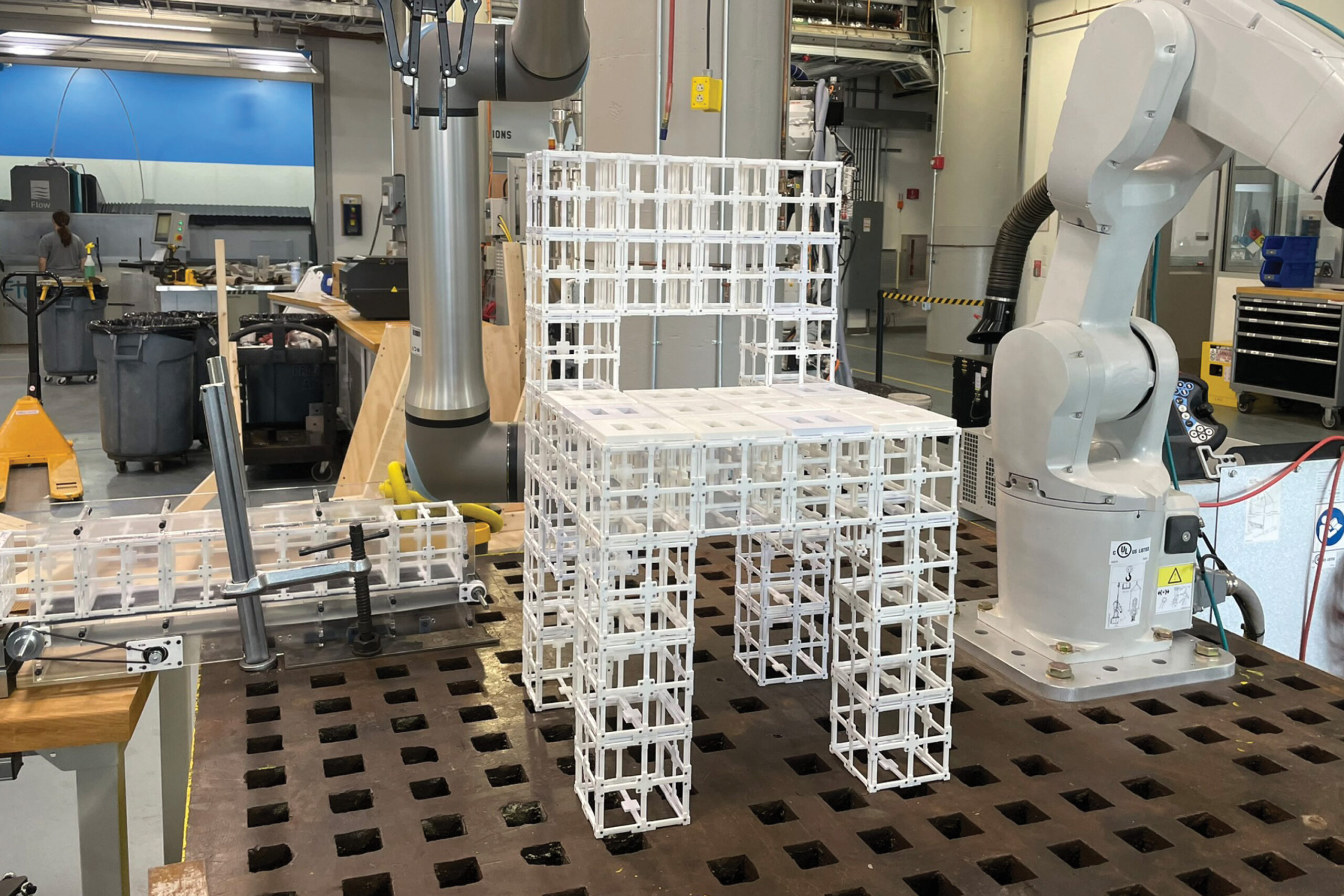
Computer-aided design (CAD) systems are tried-and-true tools used to design many of the physical objects we use each day. But CAD software requires extensive expertise to master, and many tools incorporate such a high level of detail they don’t lend themselves to brainstorming or rapid prototyping. In an effort to make design faster and more…
-

Today, out of an estimated 1 trillion species on Earth, 99.999 percent are considered microbial — bacteria, archaea, viruses, and single-celled eukaryotes. For much of our planet’s history, microbes ruled the Earth, able to live and thrive in the most extreme of environments. Researchers have only just begun in the last few decades to contend…
-

What if there were a way to solve one of the most significant obstacles to the use of nuclear energy — the disposal of high-level nuclear waste (HLW)? Dauren Sarsenbayev, a third-year doctoral student at the MIT Department of Nuclear Science and Engineering (NSE), is addressing the challenge as part of his research. Sarsenbayev focuses on…
-

During early development, tissues and organs begin to bloom through the shifting, splitting, and growing of many thousands of cells. A team of MIT engineers has now developed a way to predict, minute by minute, how individual cells will fold, divide, and rearrange during a fruit fly’s earliest stage of growth. The new method may…
-

As language models (LMs) improve at tasks like image generation, trivia questions, and simple math, you might think that human-like reasoning is around the corner. In reality, they still trail us by a wide margin on complex tasks. Try playing Sudoku with one, for instance, where you fill in numbers one through nine in such…
-

Artificial intelligence can enhance decision-making and enable action with reduced risk and greater precision, making it a critical tool for national security. A new program offered jointly by the MIT departments of Mechanical Engineering (Course 2, MechE) and Electrical Engineering and Computer Science (Course 6, EECS) will provide breadth and depth in technical studies for…
-

Let’s say an environmental scientist is studying whether exposure to air pollution is associated with lower birth weights in a particular county. They might train a machine-learning model to estimate the magnitude of this association, since machine-learning methods are especially good at learning complex relationships. Standard machine-learning methods excel at making predictions and sometimes provide…
-

MIT researchers have developed a new fabrication method that could enable the production of more energy efficient electronics by stacking multiple functional components on top of one existing circuit. In traditional circuits, logic devices that perform computation, like transistors, and memory devices that store data are built as separate components, forcing data to travel back…